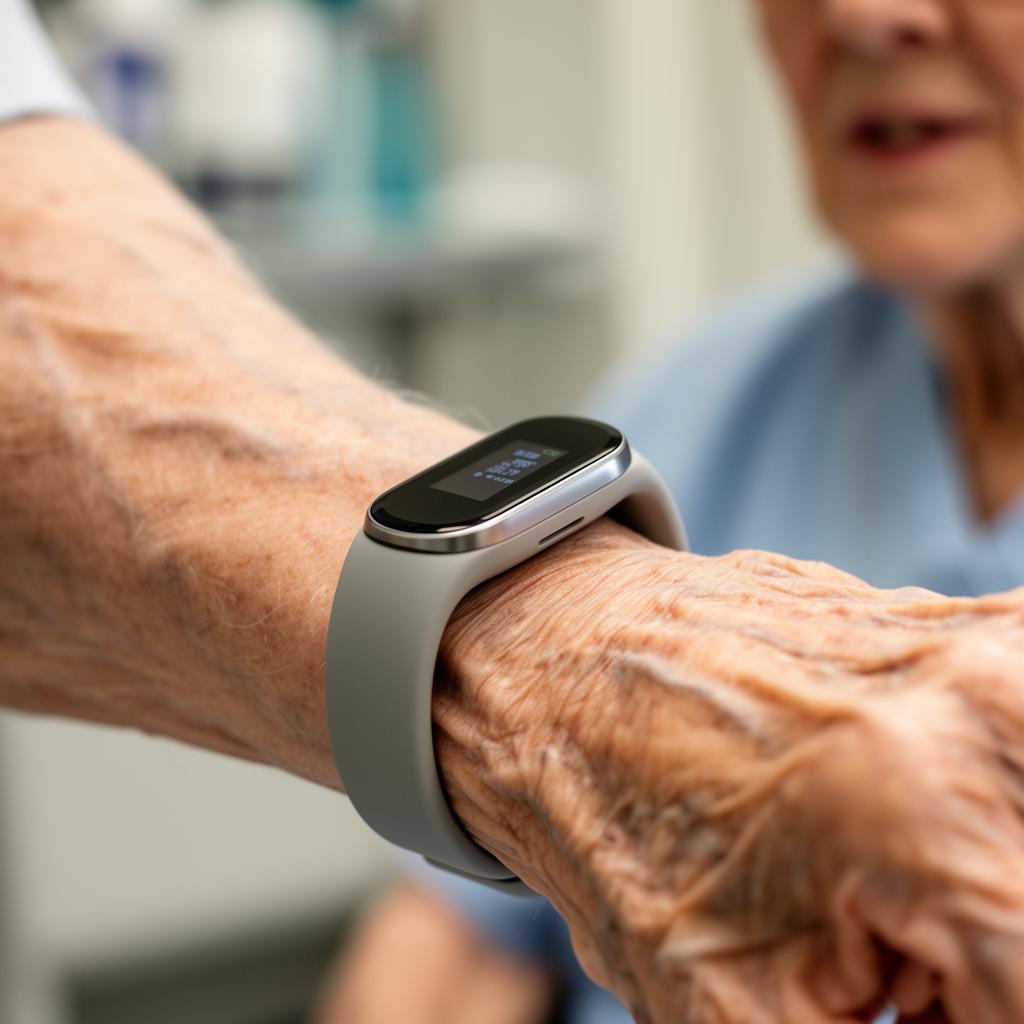

Behavioural change is also very important in the hospital for a healthy and happy life. As a patient (and a relative), you are increasingly being asked to measure your behaviour accurately and to share this information with healthcare professionals. Of course, this measuring and sharing does not always go smoothly: most tools for this are complicated or demotivating, and often they do not fit in with your daily routines. As a human being, you need a sense of (recurring) meaning and convenience.
Furthermore, you often forget to ‘log’ your data daily, it’s difficult to properly understand the data reports, you don’t recognise yourself in the standard graphs, and ultimately, you simply lose your engagement. This must and can be done differently, by ensuring that monitoring, feedback and reflection naturally align with the existing habits and routines of real people.
Over the next three years, Rozo Lab will be tackling this in collaboration with partners. We’re starting with two case studies at the Catharina Ziekenhuis : self-management of chronic conditions among cardiovascular patients, and stress management in everyday situations. Two experienced researchers will be leading the research, whilst the designers and healthcare organisations will ensure that the results are widely and sustainably applicable and usable.
Another great thing is that we are collaborating with a diverse range of stakeholders on this project, giving us a good mix of skills and experience: design, research, education, healthcare and industry.
For this project, Rozo Lab is collaborating with Eindhoven University of Technology , Amsterdam University of Applied Sciences , Design Academy Eindhoven , Alissa + Nienke , Fashion Tech Farm , Cardiron , MindHacker , the Catharina Hospital , and Workplace Vitality Hub .
The MEDAL project is made possible by ClickNL's ‘Ontwerpkracht & Transities II’ programme .
We’re really looking forward to it!