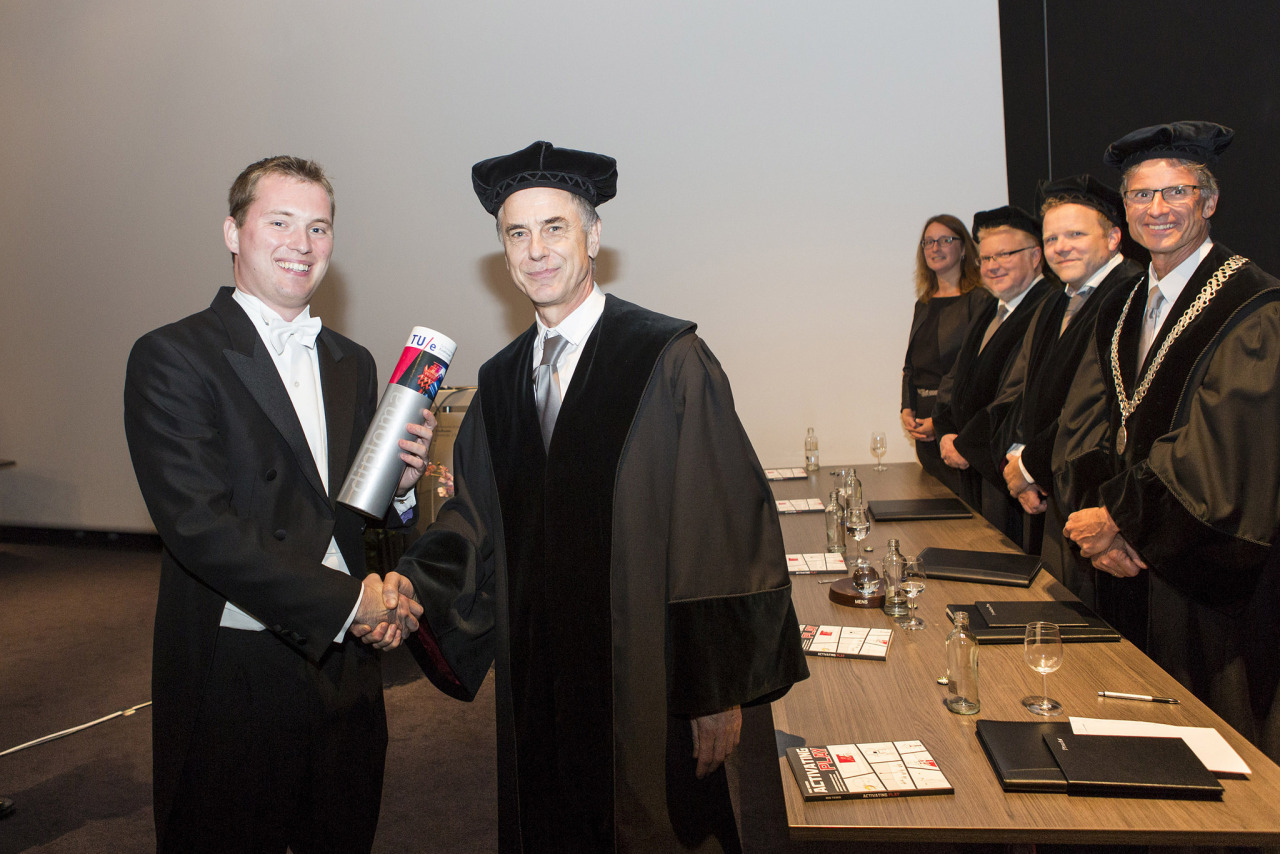

Recently, I had the honor of serving as a member of the Doctoral Committee for dr. Mariska Oosterhof-te Pas at Eindhoven University of Technology. It was also a special milestone for me: my first time sitting on “the other side of the table” in a PhD Defense.
Being back in such a ceremony brought back memories of my own PhD defense in 2015. The interesting part of seeing the process from this new perspective, is that I witnessed how this committee process brings different disciplines together that challenge and support each other. It allows science to move forward, while simultaenously protecting and guarding the integrity and rigor.
I especially liked the discussion with the other committee members (Prof. dr. Arthur Bouwman, Prof. dr. Marcel Olde Rikkert, dr. Marc Buise, Prof. dr. Marlies Schijven, dr. Peter Noordzij, Prof. dr. Hareld Kemps). The perspectives from different universities and medical vs design research disciplines helped to make a solid and valuable discussion. This combination of medical expertise and design thinking is mandatory to improve the impact of research.
Mariska’s work, which you can read more about here , sits exactly where I love to work: at the bridge of medical necessity and solutions that people actually want to use. As a designer and researcher, I like her summary and her vision for the future of screening:
“Mariska Oosterhof-te Pas’s research evaluates both established and innovative methods for identifying cognitive vulnerability and detecting POD in older surgical patients. These methods include a digital chatbot-based questionnaire, a gamified self-administered cognitive test (BAMCOG), simplified EEG-based brain monitoring (DeltaScan) to detect acute brain dysfunction, and measurement of the stress hormone cortisol in blood, saliva, and sweat as a potential biomarker for POD. The results show that patients appreciate digital and interactive tools. The chatbot is perceived as more pleasant and motivating than traditional questionnaires, and BAMCOG proved to be feasible and well accepted. Although BAMCOG is not yet suitable for detecting subtle postoperative cognitive changes, it shows promise in identifying patients at increased risk of POD.”
“In the future, digital and playful forms of screening using gamification can make [identifying cognitive vulnerability] accessible and widely applicable.”
Congratulations, dr. Mariska! It was a privilege to be part of this process.